

A Consistent Potty Routine for Dogs: Simple Steps for Home Training
October 15, 2026
Aquarium Algae Care: A Tank-Maintenance Checklist Before Using Treatments
October 15, 2026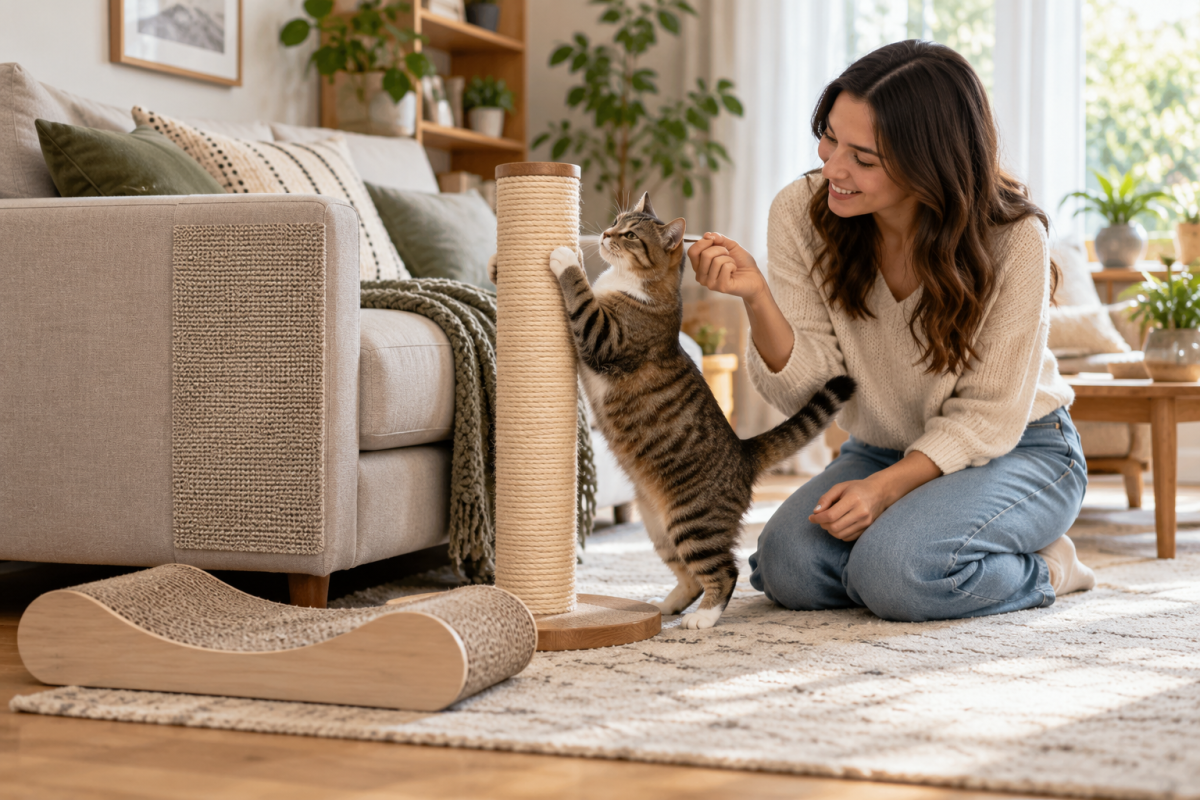
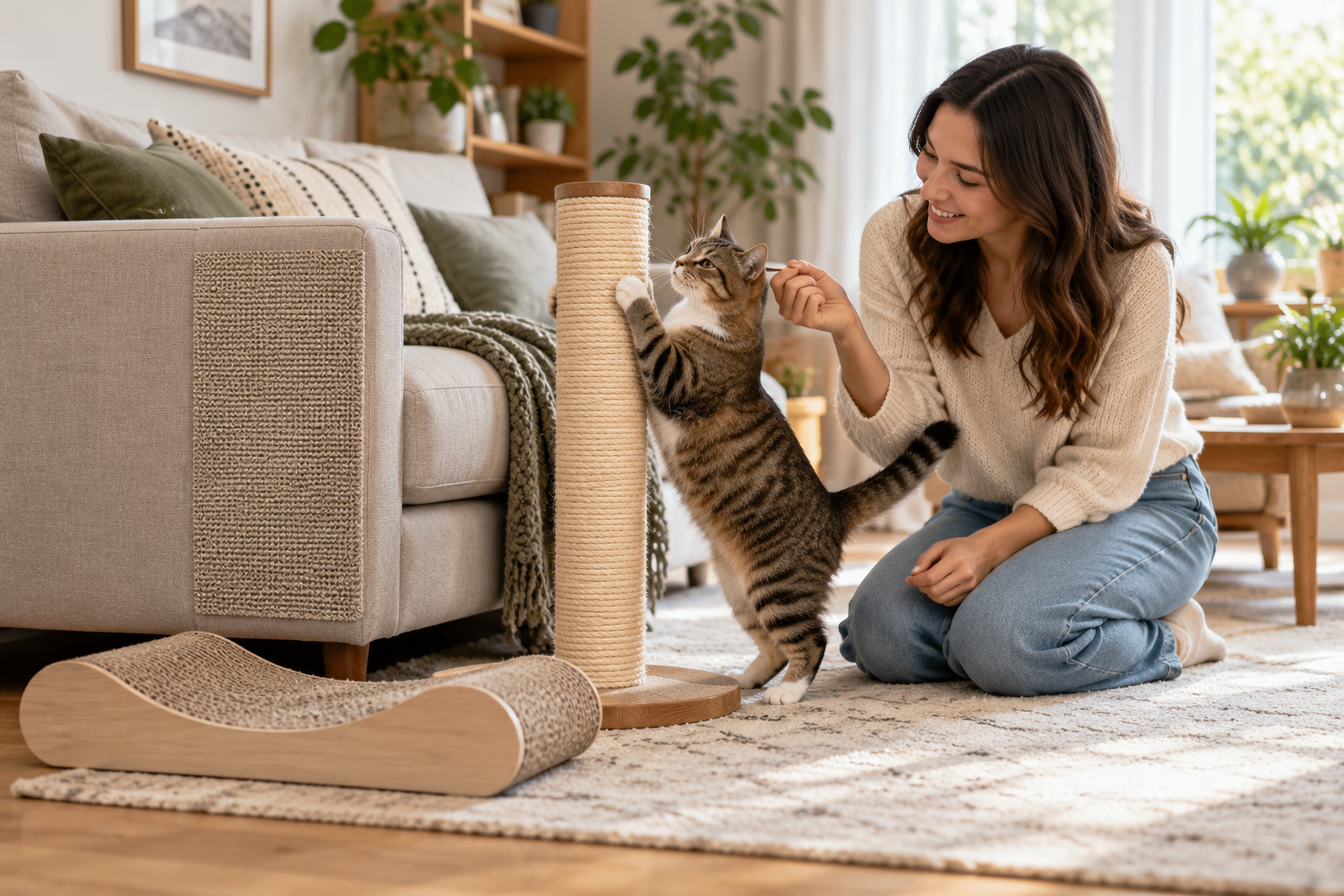
Scratching is a normal part of being a cat. It gives cats a way to stretch, maintain their claws, and leave scent and visual marks. The goal is not to stop scratching; it is to make appropriate scratching spots easy to find and use.
Offer more than one kind of scratcher
Cats can prefer vertical, horizontal, or angled surfaces, and different textures. Try a sturdy upright post and a flat scratch pad, then notice which one your cat chooses. A post should stay steady while your cat leans into it.
Put scratchers where your cat already spends time
- Place one near a favorite resting spot, since many cats stretch and scratch after waking.
- Put another near a place your cat already scratches or where people spend time.
- Keep the scratching area accessible and avoid placing it in a noisy, blocked corner.
Reward the behavior you want
When your cat uses an appropriate surface, offer praise, a treat, or a short play session if they enjoy it. A temporary furniture cover can protect a favorite spot while your cat learns a new option. Avoid punishment; it can add stress without teaching where to scratch.
Notice changes in behavior
If scratching changes suddenly or comes with other behavior changes, ask your veterinarian whether there may be an underlying concern. Each cat has its own preferences, so try one adjustment at a time and give your cat room to choose.
See our training and behavior collection for household pet-care items. Review product instructions before use; sprays and deterrents do not replace appropriate scratching surfaces.
Further reading
Feline Veterinary Medical Association: Setting Up the Environment for Success
Feline Veterinary Medical Association: Training Techniques for Undesirable Behaviors